
Taking time to build clear, SMART goals at the start of the performance cycle can make everything that follows more focused, productive and meaningful.
Strong goals help staff and managers align on expectations, track progress and stay focused on what matters most. When done well, they turn performance conversations into a reflection of meaningful work—not a last-minute exercise.
Here’s how to write goals that work.
Start With SMART Goals
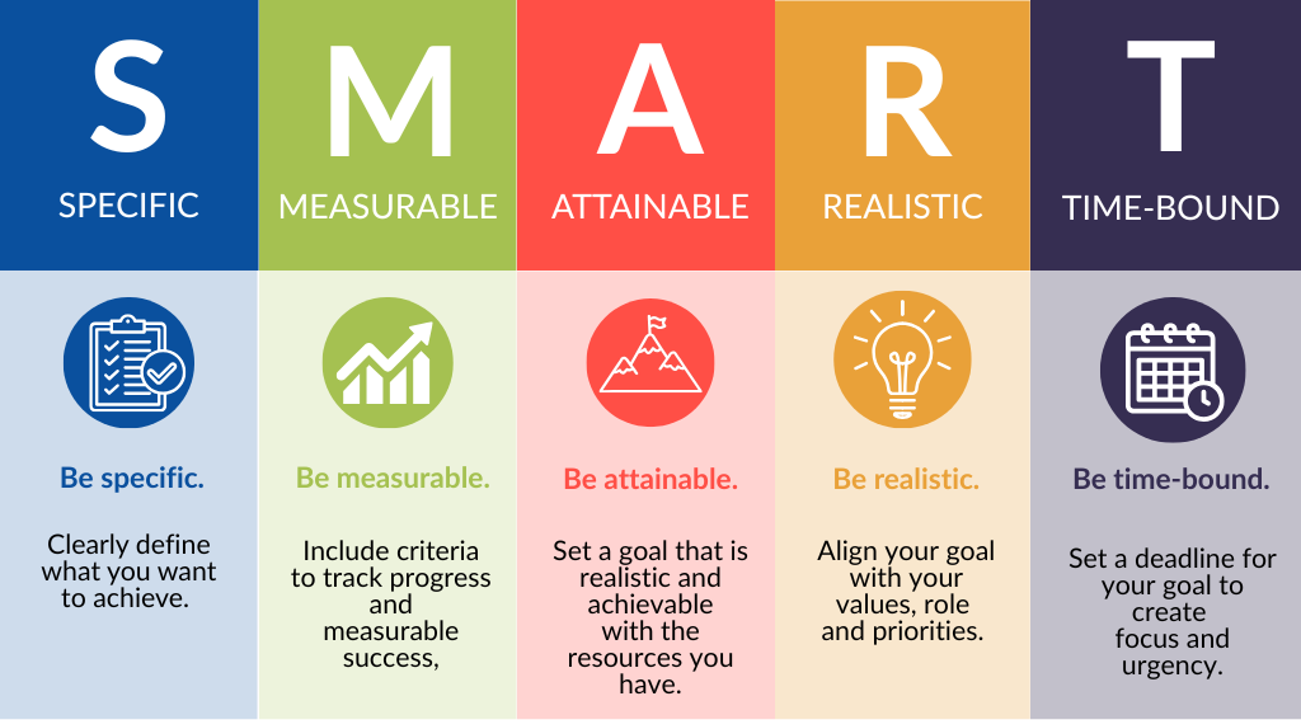
At Rice, performance goals should follow the SMART framework: specific, measurable, attainable, realistic and time-bound.
That means moving beyond broad intentions like “improve communication” to something clearer and trackable. For example: improve team meeting effectiveness by implementing agendas and action items for each meeting and collecting feedback over the next three months.
SMART goals make it easier to understand what success looks like, how progress will be measured and when the work should be completed.
Focus on Impact, Not Just Activity
Strong goals go beyond day-to-day responsibilities. They highlight how work adds value.
Instead of listing tasks, focus on outcomes. Consider how the work supports your team, department or the university as a whole. The most effective goals show how your efforts contribute to larger priorities and help move work forward.
Ensure the goal is realistic
A good goal should be challenging but achievable.
As the year progresses, it’s important to reevaluate what’s working and what isn’t. If priorities shift or challenges arise, goals can be adjusted to stay relevant. Updating a goal isn’t a setback—it’s part of keeping work aligned and meaningful.
Add Development Goals
Performance goals focus on what you do. Development goals focus on how you grow.
This could include building a new skill, taking on a stretch assignment or preparing for future opportunities. Even in a current role, development can mean mentoring others or strengthening existing skills.
Rice staff can also use learning and development resources in iO to support these goals. Courses on goal setting, feedback and performance conversations can help build skills over time and make each step of the process more effective.
Keep the Conversation Going
Goal setting isn’t a one-time task. It’s an ongoing process.
Regular check-ins with managers—both formal and informal—help track progress, address challenges early and adjust goals as needed. These conversations create clarity and keep work aligned throughout the year.
Take the Next Step
Clear goals help staff stay focused, understand expectations and see how their work contributes to something bigger. All initial goals for the fiscal year should be finalized by June 1. The goal setting process is required for all benefits-eligible staff.
Be sure to review any goals shared by your manager to ensure alignment with team and department priorities. To learn more and get started, visit the performance management webpage.