

Responsible Artificial Intelligence is one of the strategic catalysts in Momentous, Rice's 10-year strategic plan. It will help position Rice as a global leader in the development, application, and understanding of responsible AI, advancements in computing, and disruptive technologies.
Defining Responsible AI
Amy Dittmar, Provost and Executive Vice President for Academic Affairs, convened the AI Advisory Committee, consisting of both faculty and staff, and chaired by Chris Germaine, who now serves as special adviser to the provost on artificial intelligence. Reporting to both the Provost and Terrence Gee, Vice President of Technology Solutions & Services and Chief Information Officer, this group worked to define what responsible AI looks like at Rice and to ensure that institutional efforts align with the university’s mission and values.
The committee recently proposed seven values to guide how AI is used across campus:
- Transparency & the Right to Know: You have a right to know when AI is being used on you or your data.
- Consent & Opt-Out: Community members retain meaningful control over their personal and intellectual work.
- Data Security & Institutional Protection: Rice will provide secure, institutional alternatives to public tools to keep your data safe.
- Human Responsibility & Accountability: AI is a junior collaborator; humans remain fully accountable for all final outputs and decisions.
- Autonomy & Diversity of Choice: Rice promotes AI literacy without forcing the use of specific commercial platforms.
- Equity & Access: Academic and operational success should never depend on your ability to pay for premium “frontier” software.
- Environmental Stewardship: When selecting AI tools and infrastructure, Rice should weigh environmental costs alongside performance.
The committee's work didn't stop there. Four subcommittees dug deeper into how AI is shaping specific areas of Rice. Here's what each one focused on:
- Academic Integrity & Assessment examined how AI is affecting academic integrity at Rice and what assessment practices may need to change in response.
- Education for Faculty, Staff, & Students recommended how Rice can move faculty, staff, and students from initial curiosity about AI toward confident, responsible use — through training, resources, and programming, with attention to student well-being and institutional risk.
- Software and Services determined what AI tools and services Rice should provide to students, staff, and faculty, and how new tools should be evaluated before deployment.
- Vision and Policy defined Rice’s vision and values for responsible AI.
Summer AI Challenge
This summer, Rice challenged staff to complete at least four hours of AI professional development by August 31, 2026. To fit different schedules, participants could choose from on-demand recordings and courses, live virtual sessions, and in-person trainings.
The response was incredible. Here are some numbers from the preliminary report:
- 500+ Staff Members Completed the Challenge
- 1,888 Combined Hours of Completed Training
- 145 Participating Units
- Our top three groups by participation: 1.) Administrative & Support 2.) Director Level and 3.) Technical & Data
- 765 Staff Members Participated in the Virtual Synchronous Sessions
Hear from Brad Blunt, Director for Academic Processes, about his experience and takeaways from the summer challenge.
What's next: Rice AI Week 2026
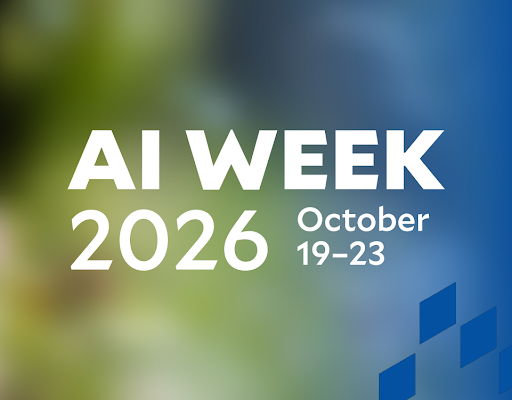
Building on the energy from this summer, Rice will host AI Week 2026, from October 19-23. AI Week will bring faculty, staff, and students together for a week of learning, hands-on demonstrations, and honest conversation about the future of AI at Rice. There will be plenty of chances to build skills and explore practical ways to use AI, and everyone at Rice is invited.
Registration will open soon.